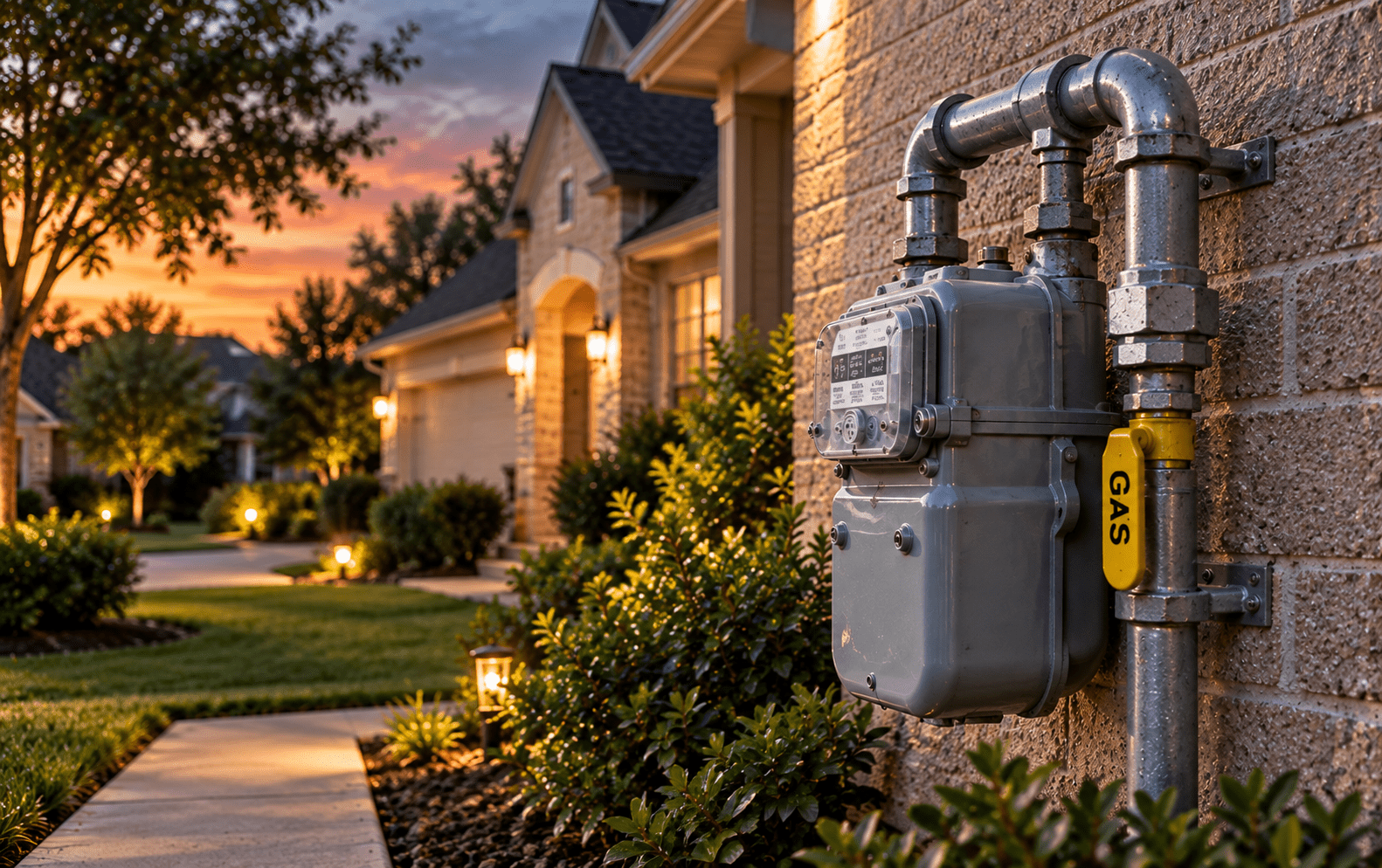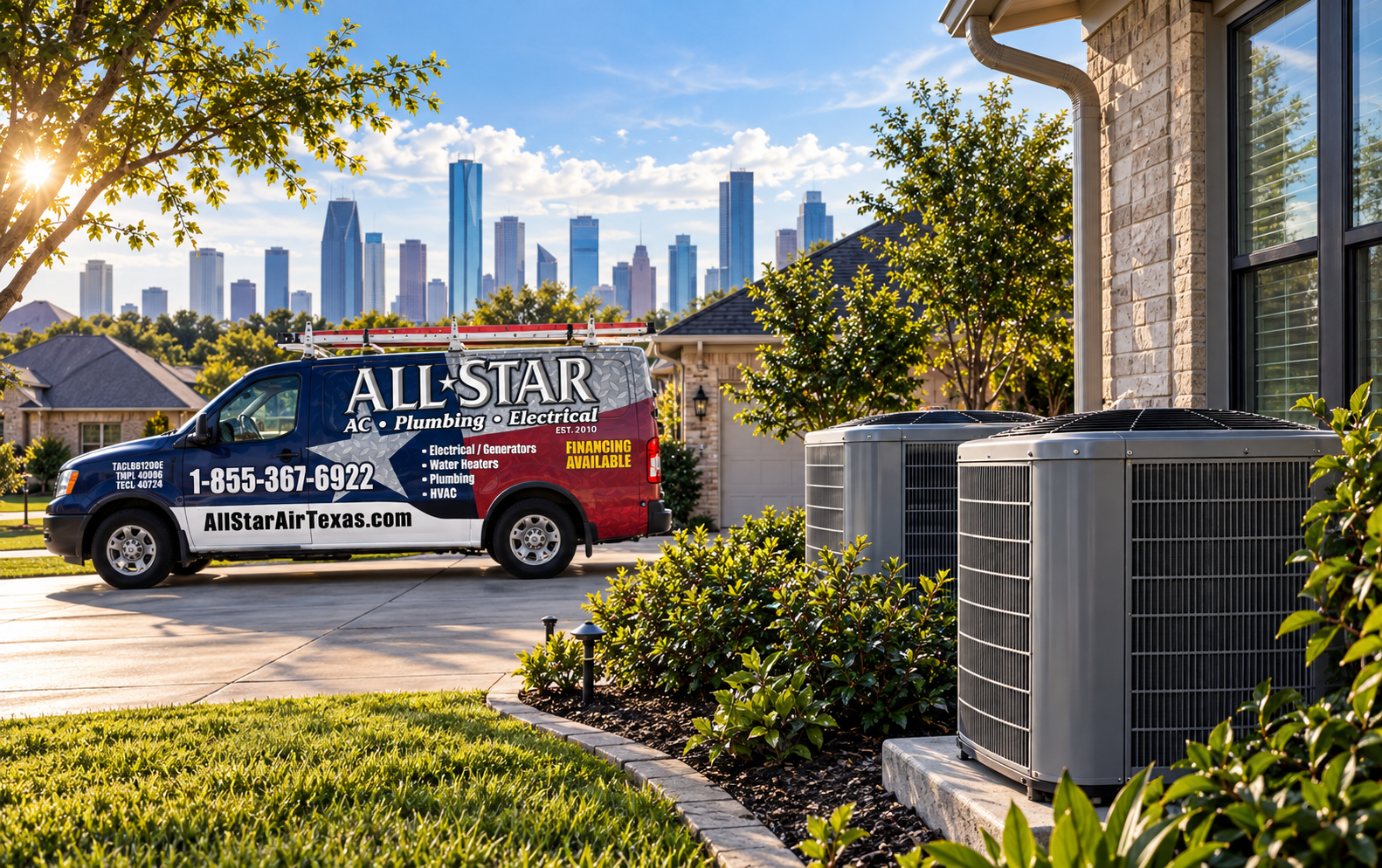


Houston homeowners know that “fall” does not always mean immediate cold weather. September and October can still bring warm temperatures, humidity, and rain before conditions become more comfortable. NWS Houston climate data shows that Houston’s normal average high is about 90°F in September and about 83°F in October, making the transition into fall a gradual one.
That makes fall HVAC maintenance Houston homeowners can do especially important. Your air conditioner may still be working hard while your heating system is getting ready for its next season of use.
Fall is also a good time to look beyond the HVAC system. Plumbing leaks, clogged drains, electrical problems, and moisture issues can become more noticeable as your home moves into a different season.
Here are 8 essential HVAC, plumbing, and electrical checks Houston homeowners should consider this fall.
1. Schedule Fall HVAC Maintenance Houston Homeowners Can Rely On
The first step in fall HVAC maintenance Houston homeowners should consider is a professional seasonal inspection.
ENERGY STAR recommends annual pre-season HVAC checkups, including checking the system’s controls, electrical connections, condensate drain, moving parts, and overall operation. For heating equipment, inspections can also include gas connections, burners, combustion, and the heat exchanger.
Even if your air conditioner appears to be working normally, routine maintenance can help identify developing problems before they turn into an unexpected service call.
A professional HVAC inspection can help check:
- Electrical connections
- Thermostat operation
- Condensate drainage
- Airflow
- Coils and blower components
- Refrigerant levels
- Heating-system components
- Overall system operation
For Houston homeowners, fall HVAC maintenance Houston services can be particularly useful because the cooling system may have spent months operating under heavy summer demand.
Internal link: HVAC Maintenance
2. Check and Replace Your HVAC Air Filter
Your air filter is one of the simplest parts of your HVAC system to inspect, but it can have a significant effect on airflow.
ENERGY STAR recommends checking central HVAC filters monthly and cleaning or replacing them when necessary, depending on the type of filter and the manufacturer’s instructions. A dirty filter can make the system work harder and may contribute to equipment damage over time.
Before cooler weather arrives, check your current filter.
Look for:
- Visible dust buildup
- Restricted airflow
- A filter that is overdue for replacement
- Incorrect filter size
- A filter that does not fit securely
Do not automatically assume that a thicker or higher-rated filter is better for every system. Always follow your equipment manufacturer’s recommendations.
Making filter checks part of your fall HVAC maintenance Houston routine can help keep airflow consistent as your system transitions between cooling and heating.
For homeowners building a complete fall HVAC maintenance Houston checklist, checking the filter is one of the easiest tasks to start with.
3. Inspect Your HVAC Condensate Drain
Houston’s humidity makes moisture management an important part of home maintenance.
Your air conditioner removes moisture from indoor air as it cools your home. That moisture needs somewhere to go, which is why HVAC systems have condensate drains and drain pans.
ENERGY STAR recommends checking condensate drains because a plugged drain can contribute to water damage and affect indoor humidity.
The EPA also recommends keeping HVAC drip pans clean and drain lines unobstructed and flowing properly as part of moisture control.
Look around your indoor HVAC equipment for:
- Standing water
- Water stains
- Excess moisture
- A clogged or slow-draining line
- Unusual odors around the equipment
If you notice water around your HVAC equipment, don’t simply ignore it. A professional inspection can determine whether the issue involves the condensate line, drain pan, pump, or another component.
Including the condensate drain in your fall HVAC maintenance Houston routine can help you spot moisture-related problems before they become more disruptive.
4. Look for Plumbing Leaks Before They Become Bigger Problems
Fall home maintenance should not stop with the HVAC system.
EPA WaterSense recommends regularly checking homes for leaks and addressing them promptly. Leaks can waste water and may cause damage if they go unnoticed.
As part of your fall HVAC maintenance Houston and whole-home maintenance checklist, inspect areas such as:
- Under kitchen and bathroom sinks
- Around toilets
- Near water heaters
- Around washing-machine connections
- Outdoor hose bibs
- Visible plumbing connections
- Ceilings or walls with unexplained water stains
You can also pay attention to changes in your water bill. An unexplained increase in water use can sometimes indicate a hidden leak.
Internal link: Plumbing Maintenance
If you suspect a leak but cannot locate the source, professional leak detection may help identify the problem before it causes more extensive damage.
A complete fall HVAC maintenance Houston plan should look at the home’s plumbing as well as its heating and cooling equipment.
5. Check Your Water Heater
Your water heater works every day, making fall a convenient time to inspect it.
EPA WaterSense recommends regularly inspecting water heaters for leaks, corrosion, aged gaskets, and loose connections. The EPA also recommends professional service at least annually to ensure the system is properly checked.
Look for:
- Water around the tank
- Corrosion
- Rust-colored water
- Unusual noises
- Loose connections
- Signs of pressure or temperature problems
If your water heater is leaking or showing signs of failure, don’t wait for the problem to become an emergency.
Adding a water-heater inspection to your fall HVAC maintenance Houston checklist gives you an opportunity to catch another common home-system problem before it becomes more expensive or disruptive.
Internal link: Plumbing Services
6. Inspect Electrical Panels, Breakers, and Outlets
Your HVAC equipment depends on your home’s electrical system, so electrical safety should also be part of your seasonal checklist.
Pay attention to warning signs such as:
- Frequently tripping breakers
- Flickering lights
- Warm or discolored outlets
- Burning smells
- Buzzing or unusual electrical sounds
- Appliances that suddenly lose power
Do not repeatedly reset a breaker if it continues to trip. A recurring trip can indicate an electrical problem that needs professional attention.
ENERGY STAR specifically includes checking and tightening electrical connections as part of HVAC maintenance because faulty connections can affect safe operation and equipment life.
For electrical problems beyond basic visual inspection, contact a qualified professional rather than attempting repairs yourself.
Electrical checks are an important part of fall HVAC maintenance Houston because HVAC equipment and electrical systems work together to keep your home operating safely.
Internal link: Electrical Services
7. Check Indoor Humidity and Moisture
Houston’s climate makes humidity an important consideration even after the peak of summer.
The EPA recommends keeping indoor relative humidity below 60%, with an ideal range of approximately 30% to 50% when possible. High humidity and moisture can contribute to condensation and mold growth.
Signs of excess indoor moisture can include:
- Condensation on windows
- Musty odors
- Damp areas
- Water stains
- Visible mold
- Persistent humidity despite normal HVAC operation
Your HVAC system plays an important role in managing indoor moisture, which is another reason fall HVAC maintenance Houston homeowners schedule should include checking condensate drainage and system performance.
If your home continues to feel unusually humid even when the air conditioner is running, have the system evaluated.
Monitoring humidity should remain part of your fall HVAC maintenance Houston routine, particularly in a climate where warm and humid conditions can continue well into the fall.
8. Check Your Outdoor HVAC Unit and Surrounding Area
Before moving deeper into the cooler season, take a few minutes to look at the outdoor portion of your HVAC system.
ENERGY STAR recommends keeping indoor and outdoor HVAC units clean and clear of debris.
Check for:
- Leaves and debris around the outdoor unit
- Grass or vegetation growing too close to the equipment
- Visible damage
- Bent or damaged components
- Standing water
- Obstructions around the unit
Do not use the outdoor unit as a storage area, and avoid placing objects directly around it.
Keeping the area clear can help your HVAC equipment operate as intended and makes it easier to spot potential problems.
For homeowners preparing a fall HVAC maintenance Houston checklist, this simple visual inspection is another useful step before the season changes.
Why Fall Is a Good Time for Home Maintenance in Houston
Houston’s fall transition is different from what homeowners experience in much of the country.
According to National Weather Service Houston climate normals, Houston’s average high temperature is approximately 90°F in September and 83°F in October, while the average low drops from about 71°F to 61°F.
That means your home may continue relying heavily on air conditioning even while you’re beginning to prepare for cooler weather.
This makes fall HVAC maintenance Houston homeowners schedule a practical opportunity to inspect the systems that keep the home comfortable year-round.
It is also an ideal time to catch smaller plumbing and electrical issues before they become larger problems.
Because Houston’s fall weather can vary, fall HVAC maintenance Houston is less about a specific calendar date and more about making sure your home’s major systems are ready for the changing conditions.
When Should Houston Homeowners Schedule Fall HVAC Maintenance?
There is no single date that works for every Houston home.
Because Houston can remain warm well into the fall, homeowners may continue using their air conditioners after the calendar changes to fall.
A practical approach is to schedule maintenance before you expect to rely more heavily on heating.
ENERGY STAR recommends seasonal HVAC checkups and specifically suggests checking heating systems in the fall.
If your HVAC system is older, has required frequent repairs, or has recently shown unusual performance, it may be worth having it inspected sooner.
Scheduling fall HVAC maintenance Houston service before a problem becomes urgent can also give you more time to address recommended repairs.
What If Your HVAC System Is Already Showing Warning Signs?
Routine maintenance is not a substitute for repairs when your system is already experiencing problems.
Call for professional HVAC service if you notice:
- Weak or inconsistent airflow
- Unusual noises
- Strange odors
- Frequent cycling
- Poor cooling
- Water around the indoor unit
- Rising energy use without an obvious explanation
- Breakers repeatedly tripping when the system operates
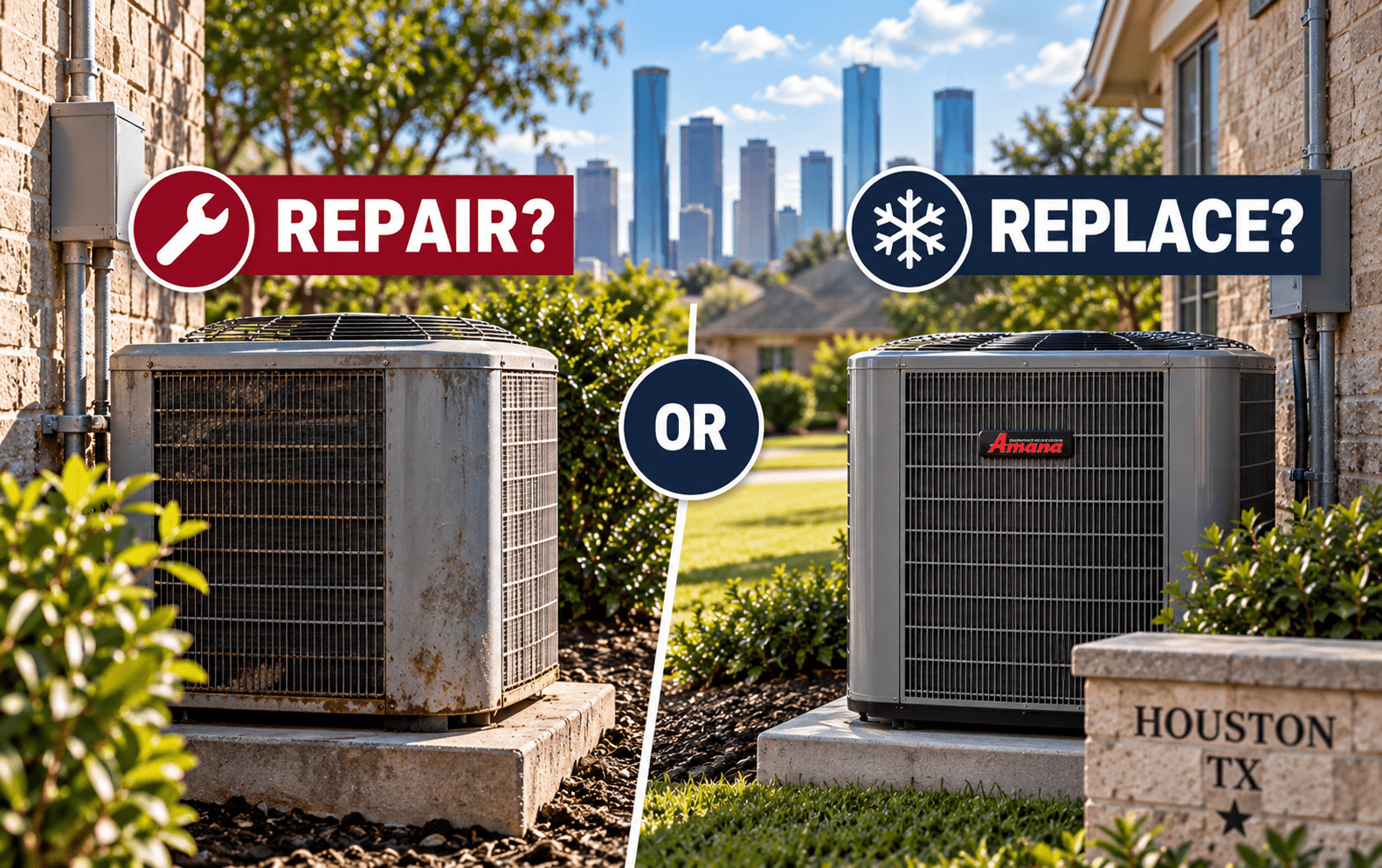
If the equipment is aging and repairs are becoming more frequent, a professional can also help you determine whether repair or replacement makes more sense for your home.
Addressing these warning signs should be part of fall HVAC maintenance Houston planning rather than waiting until the system stops working completely.
Internal link: AC Installation & Replacement
Your Fall HVAC Maintenance Houston Checklist
Before the season changes, homeowners can use this quick checklist:
☐ Schedule a professional HVAC inspection
☐ Check or replace the HVAC filter
☐ Inspect the condensate drain and drain pan
☐ Look for plumbing leaks
☐ Inspect the water heater
☐ Check for electrical warning signs
☐ Monitor indoor humidity and moisture
☐ Clear debris from the outdoor HVAC unit
Following a regular fall HVAC maintenance Houston checklist can help you identify problems early and keep your home’s major systems ready for the next season.
The goal of fall HVAC maintenance Houston is not simply to prepare your air conditioner or heating system. It is also an opportunity to take a quick look at the plumbing, electrical, and moisture-related issues that affect your entire home.
FAQs About Fall HVAC Maintenance Houston
How often should HVAC systems be maintained?
ENERGY STAR recommends annual pre-season HVAC checkups. Cooling systems are generally checked in the spring, while heating systems are checked in the fall.
Should I replace my HVAC filter every fall?
Not necessarily. ENERGY STAR recommends checking filters monthly and cleaning or replacing them when needed, based on the filter type and manufacturer’s instructions.
Why is the HVAC condensate drain important?
The condensate drain removes water produced during the cooling process. If it becomes clogged, it can contribute to water damage and indoor humidity problems.
What indoor humidity level should Houston homeowners aim for?
The EPA recommends keeping indoor relative humidity below 60%, with an ideal range of approximately 30% to 50% when possible.
Should plumbing and electrical systems be checked during fall maintenance?
Yes. Seasonal maintenance is a good opportunity to look for leaks, water-heater problems, electrical warning signs, and other issues throughout the home—not just the HVAC system.
When should I schedule fall HVAC maintenance in Houston?
Because Houston can remain warm into September and October, homeowners can schedule maintenance before they expect to rely more heavily on heating. ENERGY STAR recommends fall checkups for heating systems. Including fall HVAC maintenance Houston in your seasonal home-care routine can help you stay ahead of potential HVAC problems.
Keep Your Houston Home Ready for the Season
Fall maintenance does not have to mean waiting for something to break.
A few preventive checks can help Houston homeowners identify HVAC, plumbing, and electrical problems before they become more disruptive.
From checking your air filter and condensate drain to looking for plumbing leaks and electrical warning signs, fall HVAC maintenance Houston homeowners prioritize can be an important part of protecting their home and keeping major systems operating properly.
A consistent fall HVAC maintenance Houston routine can also make it easier to identify issues that need professional attention before they turn into an unexpected breakdown.
If your HVAC, plumbing, or electrical system needs professional attention, All Star A/C, Plumbing & Electrical is here to help Houston-area homeowners.
Call or text All Star A/C, Plumbing & Electrical at 713-842-9532 to schedule service.
Internal link: Contact All Star A/C, Plumbing & Electrical